
Black Pepper Tofu:
The Art of the Sauté
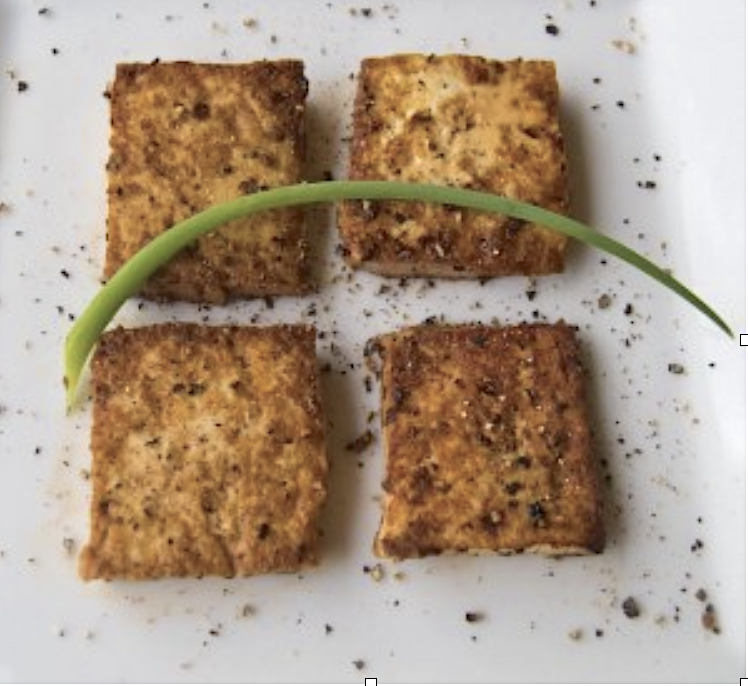
There was an art to sautéing tofu at Inn Season Cafe.
It sounds simple enough: tofu, a little oil, tamari and black pepper. But some of the simplest preparations in a restaurant kitchen are the ones that reveal the most about a cook. Properly sautéed tofu requires the right pan, the right temperature, good timing and, perhaps most importantly, patience.
Over the years at Inn Season Cafe, sautéing tofu became a fundamental kitchen skill. We used sturdy steel sauté pans that could hold heat and develop a beautifully browned surface. The pan needed to be hot enough to begin forming a crust without burning the tofu or causing it to stick hopelessly to the bottom.
Then you had to know when to leave it alone. That may be the hardest lesson.
A cook’s instinct is often to move food around the pan. With tofu, patience is rewarded. Once placed in a properly heated pan, it needs time to develop its surface. Turn it too soon and it can stick, tear or crumble. Wait until the moment is right and it releases much more readily, revealing a lightly browned exterior.
After that initial sauté, the technique changes. The heat comes down, the tamari goes in and the cooking becomes gentler. This is when the tofu begins to absorb flavor. Hot at first. Slow at the finish. That was the secret.
Giving Tofu the Flavor It Deserves
For many people, their first experience with tofu is unfortunately a bland one. A pale cube of barely seasoned tofu can turn off even an adventurous palate and reinforce the idea that tofu is something one eats for nutritional reasons rather than pleasure. It doesn’t have to be that way.
One of tofu’s great virtues is its ability to become a vehicle for flavor. Its relatively neutral character is an advantage when it is treated thoughtfully. In this recipe, that transformation comes from tamari and one of the treasured spices of Asia: black pepper.
Freshly ground black pepper is remarkably different from pepper that has been sitting pre-ground in a container. Grinding the pepper directly onto the tofu releases its volatile aromatic compounds, bringing fragrance, warmth and a wonderfully assertive bite. And we don’t add it all at once.
Half goes onto the tofu after the tamari is added. The tofu is turned, and the remaining pepper seasons the other side. As everything continues to cook slowly, the tamari concentrates and the pepper mellows slightly while retaining its characteristic heat.
The result is savory, peppery and surprisingly complex for a dish made from only four ingredients.
The Pan Matters
For the traditional Inn Season method, I prefer a good steel sauté pan rather than a nonstick pan. A well-seasoned carbon-steel pan is particularly well suited to the task. Steel encourages the surface browning that gives sautéed tofu its character. But it also asks something of the cook. The pan must be properly heated, the oil evenly distributed and the tofu given enough time before turning. This is cooking by observation rather than simply by the clock. Watch the edges. Feel how the tofu responds when you gently try to lift it. Learn when it is ready to turn. Those small observations were part of the craft of cooking at Inn Season Cafe. They are also part of what makes cooking satisfying.
An Easier Route: Air Frying or Baking
Today, there are excellent alternatives for anyone who doesn’t want to stand over a sauté pan.
An air fryer produces remarkably good tofu with very little attention. Toss the tofu gently with the olive oil, tamari and freshly ground black pepper, arrange it on parchment and air fry at 425°F for about 16 minutes. The circulating hot air creates a firm, nicely browned exterior while the inside remains pleasantly tender.
A conventional oven works beautifully as well. At 425°F, the tofu will generally take about 20 to 25 minutes, depending on your oven and how browned you like it.
Are they exactly the same as tofu patiently sautéed in a steel pan? No.
The sautéed version has a particular character—the combination of direct heat, browning and the tamari reducing in the pan creates something special. But both baking and air frying make the recipe wonderfully accessible and produce excellent results.