
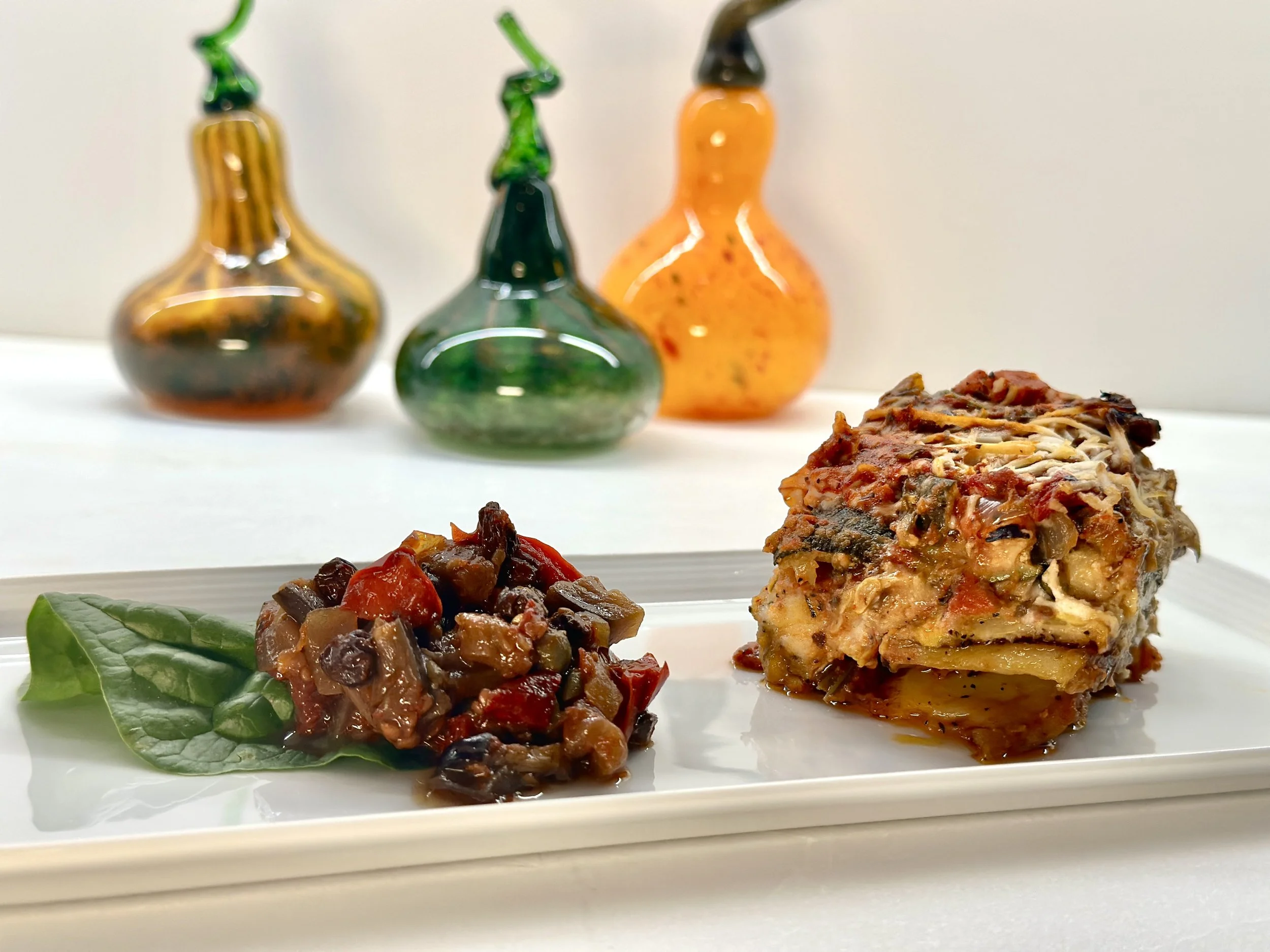
Casserole with Caponata
Milanese Zucchini Strata Casserole
Layers of Italian Tradition: A Celebration of Summer Vegetables
Italian cuisine has a remarkable ability to transform humble ingredients into extraordinary dishes. Some of its most memorable preparations begin with little more than fresh vegetables, olive oil, tomatoes, herbs, and a thoughtful approach to cooking. Milanese Zucchini Strata Casserole embraces this tradition, bringing together layers of roasted zucchini, golden summer squash, Yukon Gold potatoes, aromatic soffritto, and creamy plant-based ricotta in a richly flavored casserole.
The word strata comes from the idea of layers, and layering is fundamental to many of Italy’s most beloved dishes. From lasagna to eggplant Parmigiana, the interplay of ingredients creates something greater than the sum of its parts. Each layer contributes its own texture, flavor, and character, ultimately becoming a harmonious whole.
Although this is my own plant-based interpretation rather than a traditional Milanese specialty, it draws inspiration from the vegetable-forward cooking of northern Italy, where seasonal produce and careful preparation are celebrated.
The Art of Roasting Vegetables
One of the secrets to a successful vegetable casserole is developing flavor before assembling the dish. Too often, layered vegetable preparations become watery or lose their individual character during baking. Roasting the vegetables separately helps solve this problem while creating a deeper, more complex flavor.
Zucchini and yellow summer squash contain considerable moisture. When sliced thinly, lightly coated with seasoned flour, and roasted with olive oil, their surfaces develop a delicate crust while their interiors become tender. The flour absorbs some of the released moisture and contributes a subtle richness to the finished casserole.
The breading is seasoned with basil, black pepper, sea salt, and a touch of nutmeg. Nutmeg is particularly interesting here. Often associated with sweet preparations, it has a long history in savory European cooking, where its warm, aromatic character complements vegetables, creamy sauces, and potatoes.
For a gluten-free variation, chickpea flour can replace wheat flour. It provides a slightly nutty flavor and creates a flavorful coating that works beautifully with roasted vegetables.
Yukon Gold potatoes form the foundation of the casserole. Their naturally buttery texture and creamy interior make them particularly well suited to layered dishes. A touch of turmeric contributes a warm golden color and subtle earthiness, complementing the olive oil and roasted vegetables.
Soffritto: The Foundation of Flavor
At the heart of this recipe is soffritto, one of the fundamental building blocks of Italian cooking.
Traditionally, soffritto begins with finely chopped aromatic vegetables, commonly onion, carrot, and celery, gently cooked in olive oil until their flavors soften and meld. It is the starting point for countless Italian soups, sauces, stews, and braised dishes.
In this preparation, I expand the traditional combination with red bell pepper, garlic, fresh basil, balsamic vinegar, and a touch of crushed red pepper.
Rather than sautéing the ingredients on the stovetop, I bake them together in a covered dish. This gentle cooking method allows the vegetables to release their juices and mingle with the olive oil and balsamic vinegar, creating an intensely aromatic mixture.
The balsamic vinegar is especially important. Its natural sweetness and acidity balance the richness of the olive oil, potatoes, and plant-based cheeses. The finished soffritto becomes a flavorful bridge between the roasted vegetables and tomato sauce.
Creating Creaminess Without Dairy
Traditional Italian casseroles frequently rely on ricotta, mozzarella, or other cheeses to bring the layers together. Fortunately, plant-based ingredients offer wonderful alternatives.
Almond ricotta provides a creamy, delicate contrast to the roasted vegetables and tangy tomato sauce. A prepared almond ricotta works beautifully, but it is also easy to make a simple version using soaked almonds, sea salt, and Dijon mustard.
The mustard contributes a subtle tanginess that helps round out the flavor without overwhelming the almonds.
For the upper layers, plant-based mozzarella adds a familiar richness and melting quality. Alternatively, blanched almond flour provides a more rustic, nutty finish. Although it does not melt like mozzarella, it absorbs some of the vegetable juices and creates a pleasing texture.
These alternatives allow the dish to be adapted to different preferences while remaining entirely plant-based.
Building the Strata
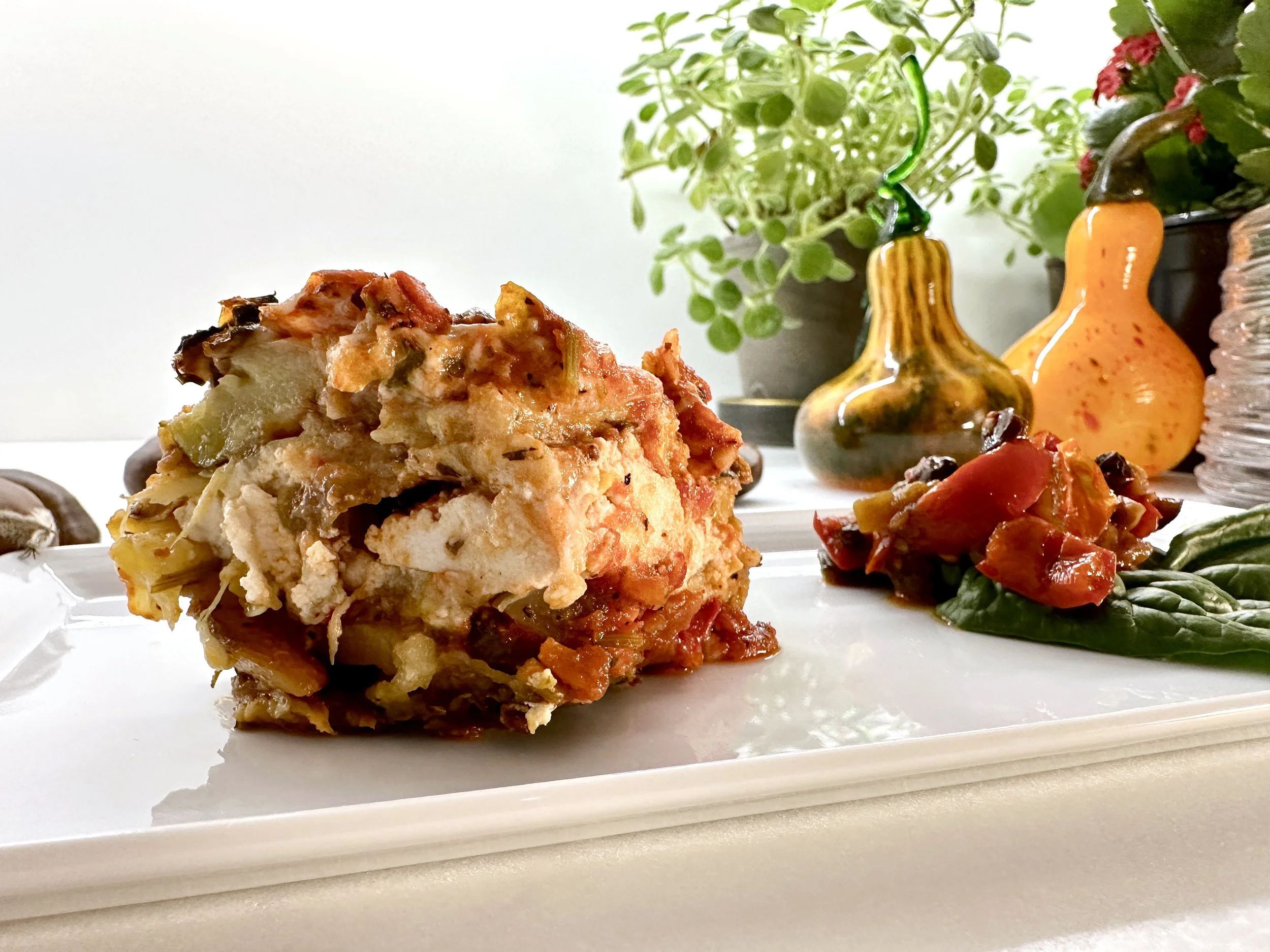
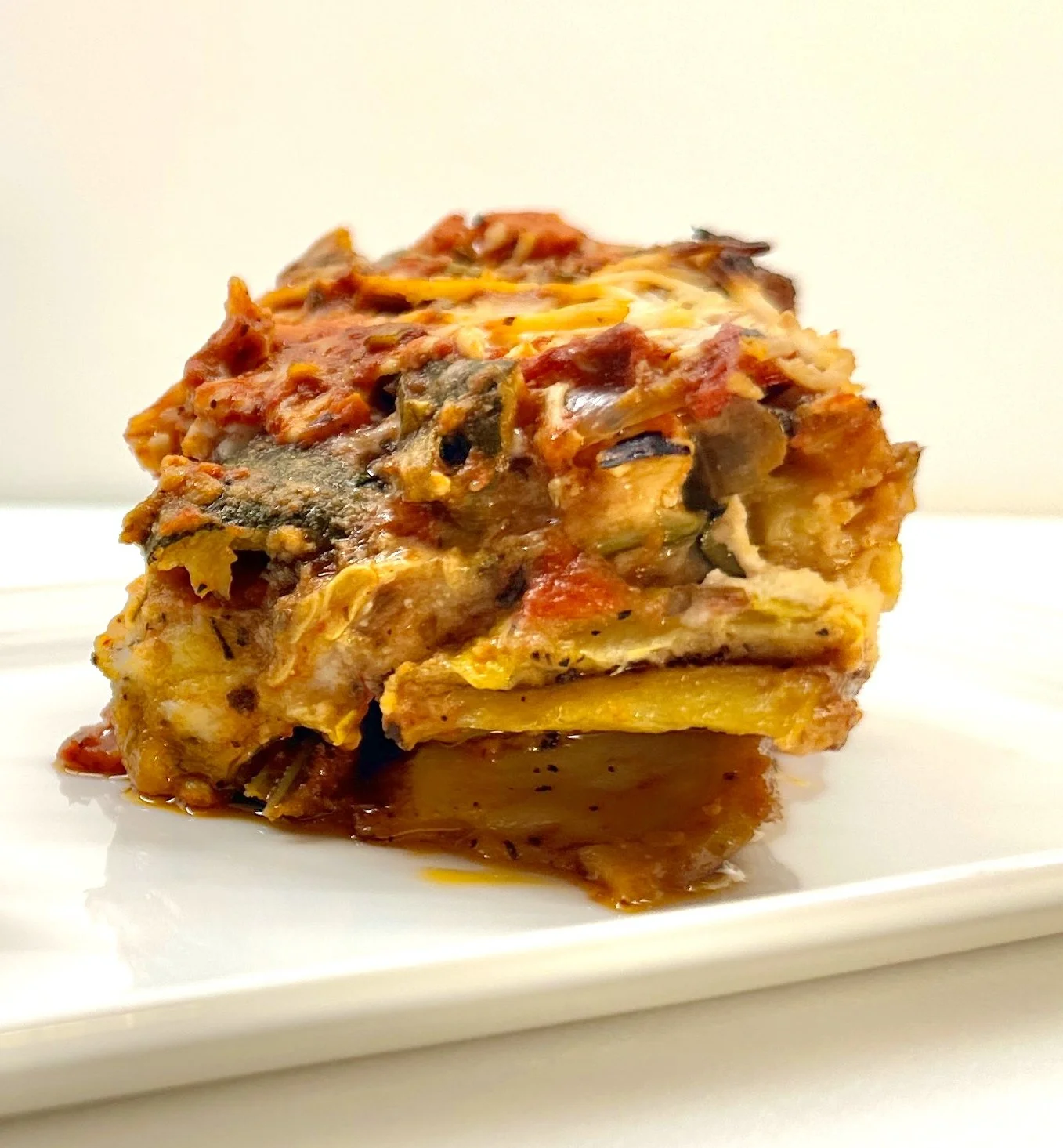
Assembling the casserole is much like constructing a lasagna. The potatoes form the bottom layer, followed by alternating layers of zucchini, yellow squash, tomato sauce, soffritto, and plant-based cheese.
The ricotta occupies the center of the casserole, creating a creamy middle layer that contrasts beautifully with the roasted vegetables.
During the final baking, the ingredients settle together, allowing the tomato juices, herbs, olive oil, and aromatic vegetables to permeate the layers.
The finished dish should be allowed to rest for at least fifteen minutes before serving. This is an important step. As the casserole cools slightly, the layers become more cohesive, making it easier to cut into attractive portions.
A Complete Plant-Based Centerpiece
One of the pleasures of Mediterranean cooking is its ability to make vegetables the centerpiece of a meal rather than an accompaniment.
This casserole is substantial enough to serve as a main course, yet elegant enough to accompany a larger Italian-inspired dinner. A crisp green salad with lemon vinaigrette, roasted seasonal vegetables, or a simple preparation of white beans with herbs would make wonderful companions.
It is also an excellent dish for entertaining. Much of the preparation can be completed ahead of time, and the flavors continue to develop as the casserole rests.
Leftovers are particularly enjoyable the following day, when the layers have had additional time to meld.
Milanese Zucchini Strata Casserole celebrates the timeless principles of Italian vegetable cooking: start with good ingredients, develop flavor through careful preparation, and allow each component to contribute to the finished dish.
The result is a colorful, nourishing, and deeply satisfying plant-based casserole that brings the warmth of an Italian kitchen to the table.